
Commercial Mold Removal in Albany NY
Mold in a commercial building is a different animal from mold in a house. The stakes are higher, the spaces are bigger, the systems are more complex, and every day of disruption costs money. Whether you manage an office building, own rental units, run a retail space, or oversee a facility, you need the problem handled fast, documented thoroughly, and done in a way that keeps your operation running.
- Licensed and Insured Network
- Same-Day Service
- Free Estimates
4.9/5
Average customer rating
Licensed NY pros
Connected with independent NYS licensed mold assessors and remediators.
Upfront pricing
Written quotes in ranges you can understand. No surprise add-ons.
Fast response
Same-day and next-day appointments across the Capital Region.
Done right
Containment, HEPA filtration, and post-job verification on every project.
That is what our commercial referral service delivers. We connect Albany area businesses and property managers with independent, licensed pros who specialize in commercial mold remediation. These are specialists accustomed to working around business hours, coordinating with facility managers, and producing the documentation that liability, insurance, and tenant relations demand. The referral is free, and you deal directly with the pro.
Mold in Your Building Is a Business Problem, Not Just a Building Problem
Here is the thing about commercial mold. The mold itself is only half the issue. The other half is everything around it. Tenants calling with complaints. Employees with aggravated allergies asking questions you cannot answer. A health inspector showing up unannounced. A prospective buyer or lender spotting staining during due diligence. In commercial real estate, mold has a way of becoming everyone's problem at once.
And the operational math is unforgiving. A remediation project that shuts down a floor of offices or closes a retail space for a week does not just cost the remediation bill. It costs lost productivity, lost revenue, and sometimes lost tenants. That is why commercial mold work lives or dies on planning. Phased work, off-hours scheduling, containment that actually contains. The goal is simple. Fix the problem completely while the business keeps breathing.
Look, we get it. You have got a hundred other priorities, and mold was not on the list this quarter. But ignoring it is the most expensive option on the table. Liability exposure grows, the contamination spreads, and the eventual fix gets bigger. One call connects you with a licensed commercial specialist who will scope it properly and work around your operation. That is a better Monday than the alternative.
A Free Referral Service That Speaks Commercial
Mold Removal Albany is a free referral service. We connect you with independent, licensed local pros. We don't do the remediation work ourselves. For commercial clients, that model has a specific advantage. We match you with specialists who actually do commercial work, not residential contractors stretching into a bigger job.
Commercial remediation demands a different skill set. Larger containment zones, complex HVAC systems, coordination with building engineers, work scheduled around occupancy, and documentation standards that satisfy insurers, attorneys, and regulators. The pros in our network are vetted for this environment. They show up with project plans, not just equipment.
Under New York State Article 32, the company that assesses and tests for mold cannot be the same one that performs remediation on covered projects. For commercial properties, where liability documentation matters enormously, this separation is especially valuable. An independent licensed assessor's findings carry weight with insurers and in legal contexts precisely because they are independent. We connect you with properly licensed assessors and remediators as separate providers, which is how the law requires it and how your documentation should look.
What Commercial Mold Remediation Involves
Commercial projects start with assessment and scoping at a different scale. A licensed assessor surveys the affected areas, which might span multiple floors, a sprawling single-story facility, or a portfolio of rental units. Moisture mapping identifies the full extent, because commercial buildings hide water in ceiling plenums, wall cavities, mechanical chases, and other places residential work rarely encounters. The resulting remediation plan is a real project document with phases, timelines, and containment strategy.
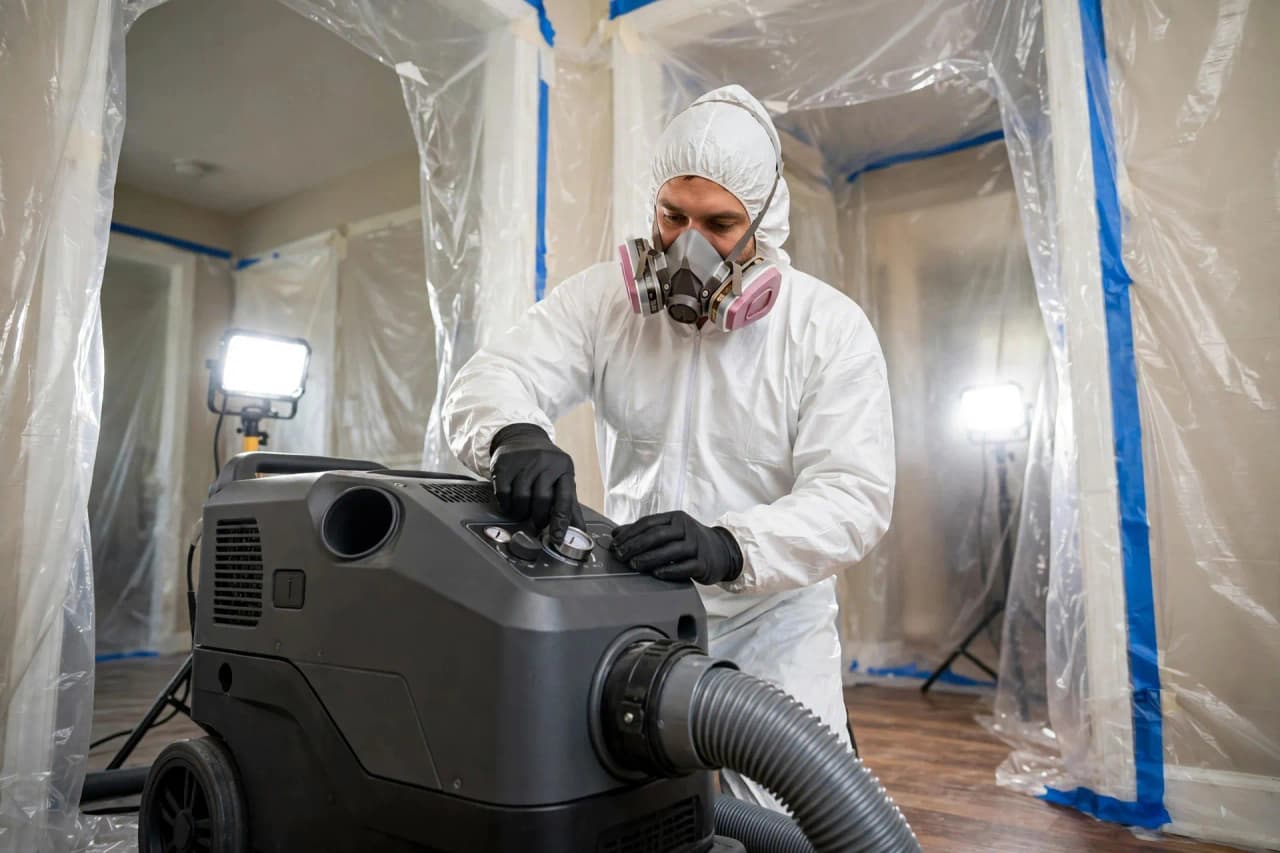
Execution is where commercial experience shows. Containment zones get built to protect occupied areas, often with negative air pressure systems that keep spores from migrating into active workspaces. HEPA air scrubbers run continuously, scaled to the cubic footage involved. Work is frequently phased so parts of the building stay operational, and noisy or disruptive phases get scheduled for nights or weekends. Communication with building management is constant, because surprises are the enemy.
The closeout matters as much as the cleanup. Post-remediation verification confirms the work achieved its goals. Documentation packages include the assessment findings, the scope of work, daily logs, photographic records, and clearance results. For property managers and business owners, this paper trail is gold. It answers tenant questions, satisfies insurers, and protects you if issues ever get revisited. A pro who shrugs at documentation is not a commercial pro.
Our Process for Commercial Clients
It begins with a detailed conversation about your building and your constraints. What type of property, how large, what you are seeing or smelling, whether tenants or employees are affected, and what your operational schedule looks like. We use that to match you with a licensed commercial specialist whose experience fits your situation, whether that is an office building, a retail space, a multi-unit residential property, or an industrial facility.
The assessment phase is thorough and minimally disruptive. The pro surveys the building, maps moisture, and identifies both the mold and its source. A separate licensed assessor handles any testing, keeping the process compliant with New York's requirements and your documentation clean. You receive a written project plan with scope, phasing, timeline, and pricing. For larger projects, this is the document your stakeholders, insurers, or ownership group will want to see.
Remediation proceeds according to plan, with containment protecting occupied areas and work scheduled to minimize downtime. You get regular updates, photo documentation, and a clear closeout package with verification results. From first call to final clearance, you deal with professionals who understand that your building is a business asset, not just a job site.
- Free matching with a licensed commercial mold specialist
- Comprehensive building assessment with moisture mapping
- Independent testing through a separate licensed assessor
- Phased remediation planned around your operations
- Full documentation package for liability and insurance needs
Commercial-Grade Equipment and Methods
Scale changes everything about equipment. Commercial jobs deploy multiple HEPA air scrubbers sized to the space, negative air machines maintaining pressure differentials across containment zones, and commercial dehumidification capacity that dwarfs residential gear. Moisture detection goes beyond handheld meters to include thermal imaging surveys of large areas and sometimes invasive inspection of wall cavities and plenums.
Containment in an occupied building is a discipline of its own. Polyethylene barriers with zippered entries, negative pressure monitoring, sealed HVAC connections to prevent cross-contamination between zones. The goal is that people working twenty feet away notice nothing except perhaps a low hum. Achieving that in an active office or retail environment takes planning and the right equipment in the right quantities.
On the treatment side, commercial pros use professional-grade antimicrobials appropriate to the materials involved, from drywall and ceiling tiles to structural steel and concrete. Porous materials with heavy growth get removed rather than treated, because in commercial settings the liability of leaving questionable material in place outweighs the savings. Everything is documented as it happens, creating the record your risk management needs.
The Real Costs of Commercial Mold: Health, Liability, and Money
Employee and tenant health is the human side. Mold exposure can aggravate allergies, asthma, and respiratory conditions, and in a commercial building, complaints have a way of multiplying. One person mentions a musty smell, then three more notice symptoms they had been ignoring. Whether or not every complaint traces to mold, the perception problem alone can damage morale and tenant relations. Addressing the actual issue promptly is always cheaper than managing the fallout.
Liability is where commercial mold gets genuinely expensive. Landlords have obligations to maintain habitable premises. Employers have obligations around workplace safety. If someone can show you knew about a mold problem and did nothing, the exposure goes well beyond remediation costs. Thorough documentation from licensed independent professionals is your best protection, which is another reason the assessment and remediation separation under New York law matters so much for commercial properties.
Then there is the direct financial math. Every day of disrupted operations costs money, which is why phased work and off-hours scheduling are worth their premium. Delayed action lets contamination spread through HVAC systems and into new areas, multiplying the eventual scope. Most commercial projects are scoped individually rather than fitting neat price ranges, but the pattern is consistent. Early, professional intervention costs a fraction of late, emergency-scale remediation plus business interruption.
How We Vet Commercial Remediation Pros
Our commercial vetting goes beyond the basics. Current New York State licensing for both assessors and remediators is the floor, not the ceiling. We look for firms with genuine commercial project experience, meaning they can show you buildings like yours they have handled, not just houses. References from property managers and facility operators carry real weight in our evaluation.
We pay close attention to how they handle the business side of the work. Do they produce written project plans with phasing and timelines. Do they document daily. Can they coordinate with building engineers and work around occupancy. Do they understand what insurers and attorneys need to see in a closeout package. A contractor who is excellent at remediation but chaotic at project management is a liability in a commercial setting.
Customers often tell us the difference was night and day compared to their first attempt with a residential contractor. Commercial work is project work, and it needs to be treated that way. Because we are a free referral service with no stake in the contract value, our incentive is purely to match you with the firm that will handle your building professionally. That alignment is the foundation of the trust this service is built on.
Commercial Mold Across the Capital Region
Albany's commercial landscape creates familiar mold scenarios. Downtown office buildings, including historic stock around Center Square and along the older commercial corridors, combine aging envelopes with complex HVAC systems. A roof leak or facade failure can feed hidden growth for months before anyone connects the musty smell on the third floor to water entering two floors up.
Rental properties are a constant source of commercial mold work. Landlords from Arbor Hill to Troy to Schenectady deal with moisture issues in aging multi-unit buildings, where a single plumbing leak can affect multiple units and tenant complaints escalate quickly. Student housing near the universities adds turnover-related challenges, with units sitting closed up and humid between leases. Property managers in Colonie, Guilderland, and Latham handle similar issues across garden-style complexes and mixed-use buildings.
Retail and hospitality spaces have their own patterns. Flat roofs on strip centers pond water, rooftop HVAC units develop drain line issues, and the pressure to stay open complicates scheduling. Facilities in Saratoga Springs, with its seasonal hospitality surge, often need work done in narrow off-season windows. Industrial and warehouse spaces in Rotterdam, Cohoes, and Watervliet deal with condensation on metal building components and vast square footages that make assessment a real project. Local commercial pros know these building types because they work in them constantly.
Why Businesses Start With Mold Removal Albany
Procurement of remediation services is not most managers' core skill, and the stakes of getting it wrong are high. We simplify it. One detailed conversation, and we match you with a licensed commercial specialist whose experience fits your building type and situation. You get a professional project plan, proper documentation, and work scheduled around your operation. The referral is free.
The independence of our model serves commercial clients particularly well. The assessment comes from a separate licensed assessor with no stake in the remediation contract, which is both legally required under New York State Article 32 and exactly what your insurer, your attorney, and your ownership group want to see. Clean documentation starts with clean process.
Speed matters in commercial situations, and our network is built for it. Whether you are dealing with tenant complaints that need a credible response, a transaction contingency with a deadline, or an active moisture event threatening operations, we connect you with pros who mobilize quickly and communicate like professionals. Your building is your business. We treat it that way.
Serving Commercial Properties Throughout the Region
Our commercial referral network covers Albany and the full Capital Region, from downtown office towers to suburban retail centers to industrial facilities along the river towns. Whatever type of commercial property you manage or own, we match you with a specialist experienced in that building type.
For multi-location owners and property management firms, we can coordinate assessments across portfolios, giving you a consistent process and comparable documentation property to property. That consistency is valuable when you are reporting to ownership groups or managing insurance relationships.
Every engagement starts the same way. A conversation about your building, your timeline, and your operational constraints, followed by a direct connection to a licensed commercial pro. Free referral, no obligation, and a project plan you can actually use. If you are dealing with tenant complaints, a transaction deadline, or an active moisture event, mention it upfront so we match you with a pro who can mobilize on your timeline.
Let's Talk About Your Building
Commercial mold problems do not improve with time, and the business costs compound while you wait. Tenant patience thins, liability exposure grows, and contamination spreads into more of the building. The sooner a licensed commercial specialist assesses the situation, the more control you have over the timeline, the cost, and the disruption.
Starting the conversation costs nothing. Tell us about your property and what you are dealing with, and we will match you with a licensed commercial mold pro who will scope it properly and plan the work around your operation. You will get straight answers, real documentation, and a path forward. One conversation is all it takes to replace uncertainty with a plan.
We have answered the most common commercial questions below. For anything specific to your building, bring it to the call. The specialists in our network deal with commercial complexities daily, and they would rather understand your constraints upfront than discover them mid-project.
How It Works
No mystery, no jargon. Here is exactly what happens when you call.
- 1
Free inspection
A local pro walks your home, finds every affected area, and explains what is going on in plain English.
- 2
Containment
The work area gets sealed off with plastic sheeting and negative air pressure so spores cannot spread.
- 3
Removal and cleaning
Contaminated materials are removed safely, then surfaces are HEPA vacuumed and treated with antimicrobial solutions.
- 4
Drying and verification
Everything is dried to safe moisture levels and checked again. You get documentation of what was done.
Common Questions
Related Mold Services
Nearby Service Areas
Mold Does Not Wait. Neither Should You.
Get a free inspection and an honest quote from a licensed local pro. No pressure, no obligation.