
June 24, 2026 · Mold Removal Albany
Can You Stay Home During Mold Remediation?
The short answer is usually yes. Here is how containment keeps your household safe, when leaving makes sense, and how to plan for kids, pets, and daily life.
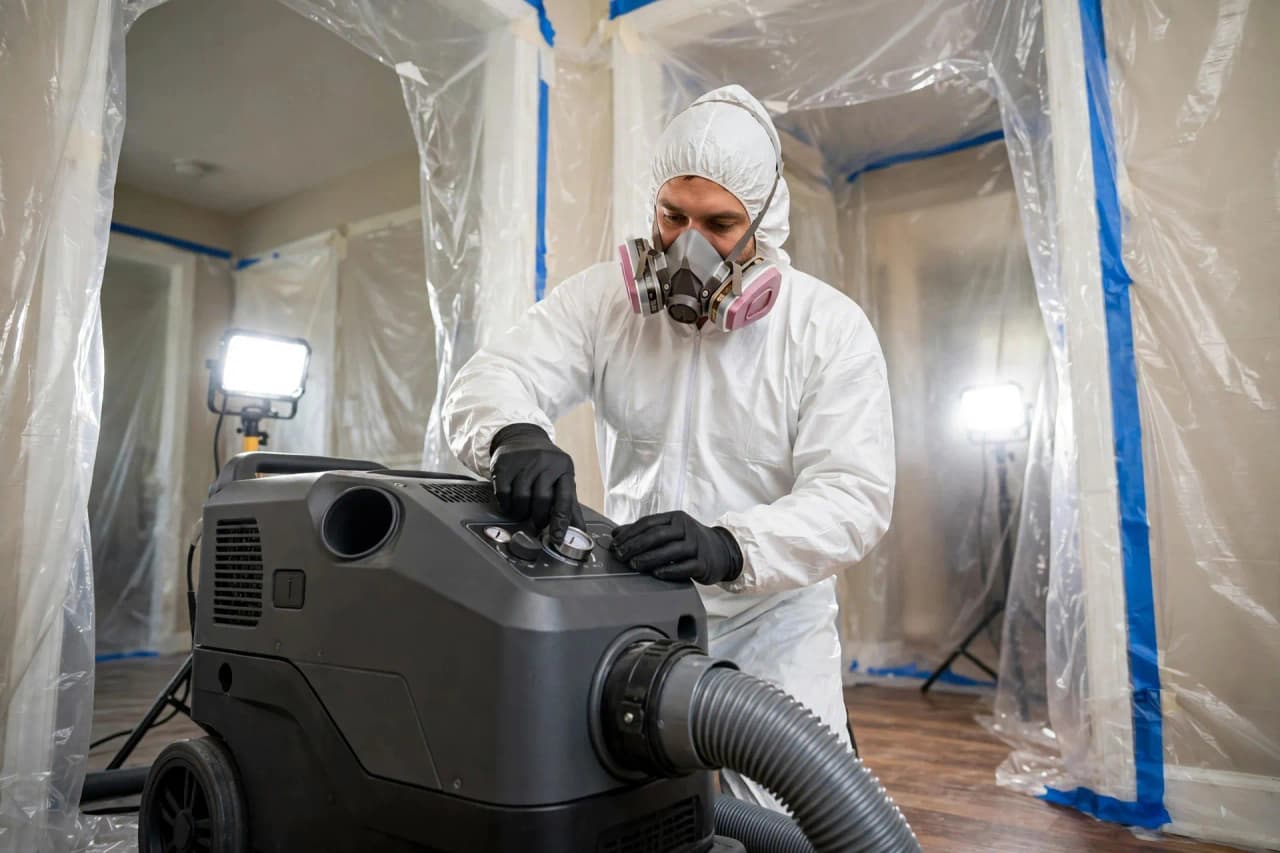
It is the question everyone asks but feels silly asking: do we have to move out? Between the hazmat-looking suits in the photos and the word "containment," mold remediation sounds like something that requires evacuating the premises. The reality is much more boring, in the best way.
For the vast majority of residential jobs, yes, you can stay home during mold remediation. Proper containment isolates the work area, and life goes on around it with minor adjustments. There are exceptions, and we will cover them honestly, but most families never pack a bag.
How Containment Actually Keeps You Safe
Containment is the unsung hero of remediation, and understanding it answers most stay-or-go anxiety. The crew seals the work area with heavy plastic sheeting, taping every seam and covering doorways with zippered entries. Then they set up HEPA-filtered air scrubbers that create negative air pressure, meaning air flows into the work zone but not out of it. Spores released during demolition get captured instead of drifting through your house.
This is not improvised. It is the industry standard protocol, and licensed pros do it on every job where dust and spores will be generated. The plastic looks dramatic, which is why the photos scare people, but the drama is the protection working. A well-built containment is remarkably effective at keeping the rest of your home at normal conditions.
What this means practically: the crew works inside the bubble, you live outside it. Air scrubbers hum away, the zipper door gets used for entry and exit, and your living room, bedrooms, and kitchen stay business as usual. Most homeowners tell us the biggest disruption was the noise, not any concern about air quality.
When Staying Home Is Totally Fine
Single-area jobs are the easy case. Mold in one basement section, one bathroom, or one attic area with the rest of the house unaffected? Stay put. The containment handles it, and you will barely notice beyond workday noise and a crew coming and going.
Even multi-room jobs are usually fine as long as the work areas can be isolated and your essential living spaces, bedrooms, bathrooms, kitchen, stay outside containment. Crews plan the containment layout around your household's needs when you tell them what those needs are. Speak up during the estimate about which rooms are non-negotiable.
Families with kids and pets stay home through remediation all the time. The rules are simple and the crew will brief you: do not enter the containment, keep pets away from the work area (mostly because open doors and curious animals are a bad combination), and let the crew know about nap schedules if noise is a concern. Professional crews are used to working around family life. It is literally their everyday.
When Pros Recommend You Leave (Temporarily)
Honesty requires the exceptions. If mold has contaminated your HVAC system, the calculus changes, because the ductwork touches every room and remediation may involve running the system or opening components. Some contractors recommend vacating during active HVAC cleaning, typically just for the day or two of that phase.
Very large whole-house projects can also warrant temporary relocation, not because of danger exactly, but because of practicality. If containment covers half your living space, if water and power need to be shut off for extended periods, or if the noise and disruption span weeks, a short-term stay elsewhere is simply more comfortable. This is rare for typical residential jobs.
The clearest leave-temporarily case is household health vulnerability. If someone in the home has severe asthma, is immunocompromised, or has a doctor's guidance to avoid construction dust and mold exposure, err on the side of caution. We are remediation pros, not physicians. When health is fragile, the doctor's advice outranks our general guidance every time.
Kids, Pets, and Elderly Family Members
Let us talk specifics, because generic reassurance is not what parents need. For kids, the main risks during remediation are curiosity and noise, not exposure, assuming proper containment. Toddlers who cannot understand "do not go past the plastic" need the work area physically secured, which good crews do anyway. Older kids just need the briefing: the plastic stays closed, the equipment stays untouched.
Pets are honestly the bigger logistical challenge. Dogs bark at strangers in the house all day. Cats find the one gap in the containment you swore was sealed. If your pet is anxious, reactive, or an escape artist, daycare or a friend's house during work hours is a kindness to everyone, including the crew trying to maintain negative air pressure with a cat slipping through the zipper door.
For elderly family members or anyone with respiratory conditions, have a direct conversation with the contractor before work starts. Ask how they will verify the rest of the home stays clean, whether they do post-work HEPA cleaning of adjacent areas, and what the plan is if anyone feels unwell. A good contractor welcomes these questions. A dismissive one is telling you something.
What Daily Life Looks Like During the Work
A typical workday runs something like standard construction hours, usually starting around 8 or 9 in the morning. Expect noise during demolition and cleaning phases: cutting, scraping, HEPA vacuums, air scrubbers humming constantly. It is not subtle, but it stops at quitting time, and most people adapt within a day.
Plan around the affected systems specifically. If your only shower is inside the work zone, arrange alternatives before day one. If the kitchen is affected, think through meals. If the crew needs the driveway for their trailer and equipment, sort out parking. These logistics questions are worth asking during the estimate, not discovering on day two.
One underrated tip: do a quick wipe-down of surfaces near (not inside) the work area after the job completes, even though the crew should HEPA-clean adjacent spaces. No containment is absolutely perfect, and ten minutes with a damp cloth on nearby shelves buys peace of mind. Then enjoy the deeply satisfying feeling of a house with one fewer problem.
Questions to Ask Your Contractor Before Day One
The estimate visit is your chance to nail down the living arrangements, and the quality of the answers tells you a lot about the contractor. Ask: which exact areas will be under containment, and for how many days? Will water, power, or HVAC be interrupted, and when? What are the work hours? How do you verify the rest of the house stays clean?
Also ask about the plan for surprises. If they open a wall and find more mold, how is that communicated and approved? Who do I call with concerns during the job? What does the final walkthrough include? Contractors who answer crisply have done this before. Contractors who wave it off with "do not worry about it" have also done this before, and not well.
Get the key points in writing as part of your contract: scope, timeline, containment plan, and communication expectations. This is not being difficult. This is being a prepared homeowner, and the good contractors actually prefer clients who ask these questions upfront.
The Bottom Line for Albany Households
So, can you stay home during mold remediation? In our experience, the answer is yes for the overwhelming majority of Capital Region jobs. Containment technology is proven, licensed pros use it every day, and households of all shapes live through remediation without incident. The horror stories come from jobs done without proper containment, which is precisely why New York licenses this work and why you should hire licensed pros.
The exceptions are real but narrow: HVAC contamination, whole-house-scale projects, and health-vulnerable household members. If any of those apply, discuss temporary relocation openly with your contractor during the estimate. For everyone else, plan for a few days of construction noise, keep the kids and pets clear of the plastic, and carry on.
Mold Removal Albany is a free referral service connecting you with independent, licensed local pros who handle the stay-or-go conversation honestly during every estimate. No scare tactics, no unnecessary upheaval, just a clear plan for your specific job and household. That is how this should work.