
August 13, 2026 · Mold Removal Albany
Attic Mold and Roof Ventilation: The Connection Explained
Nine times out of ten, attic mold traces back to ventilation problems. Here is how poor airflow creates attic mold and what proper ventilation actually looks like.
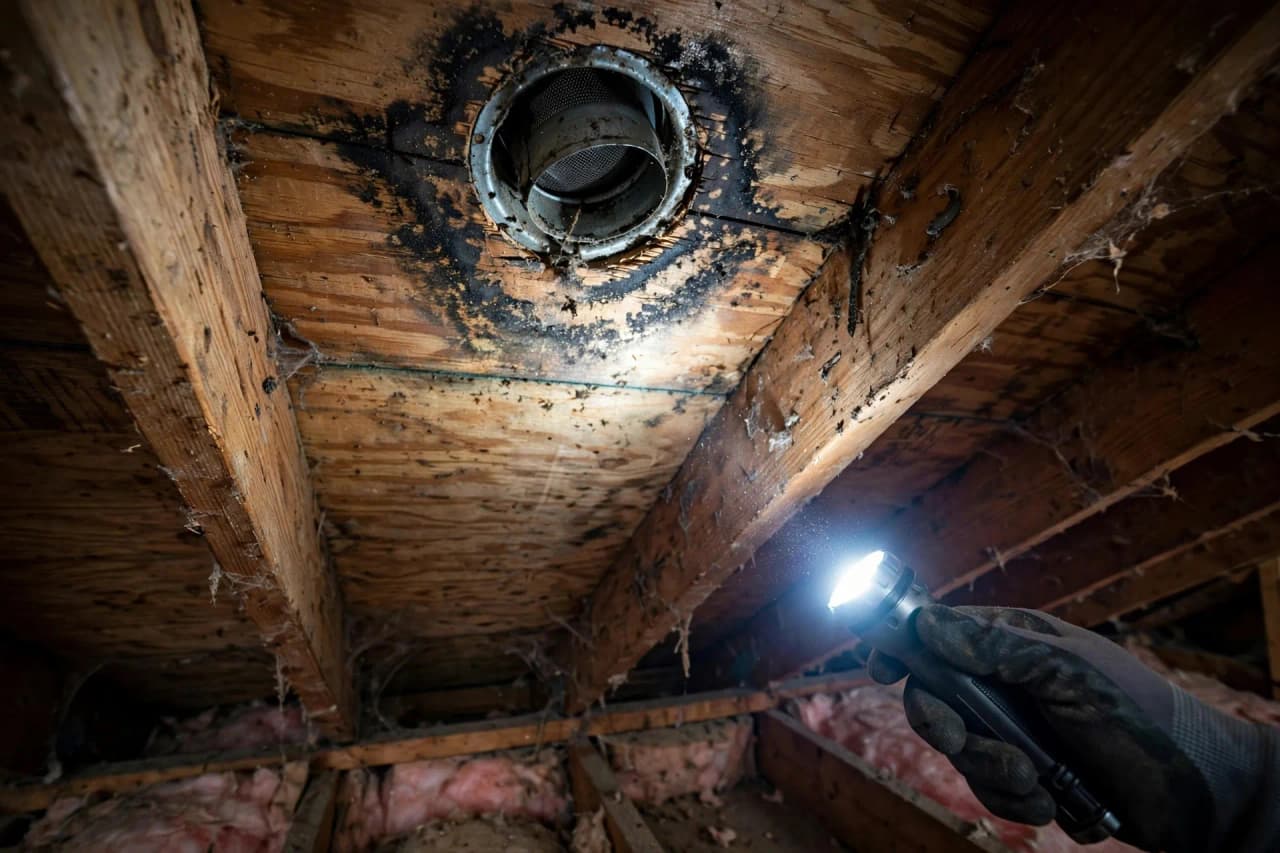
Here is something most homeowners do not realize until a home inspector or roofer delivers the news: the vast majority of attic mold in the Capital Region is a ventilation problem wearing a mold costume. The mold is the symptom. The airflow is the disease.
This is actually good news, because it means attic mold is one of the most preventable mold problems we deal with. Understand the connection between your roof ventilation and your attic's health, and you can stop the cycle instead of just scrubbing the evidence.
Why Attics Grow Mold in the First Place
Mold needs three things: food, moisture, and the right temperature. Your attic provides the food automatically, since roof sheathing, rafters, and trusses are all wood, an all-you-can-eat buffet. Temperature is rarely the limiting factor either. So attic mold comes down to one variable: moisture. Control the moisture, and the mold never gets started.
Where does attic moisture come from? Mostly from inside your own house. Warm, humid air from showers, cooking, and daily living rises through every gap in your attic floor, around light fixtures, plumbing stacks, chimney chases, attic hatches, and into the cold attic. There it hits the frigid underside of the roof deck and condenses into liquid water. All winter long, drip by drip, that sheathing stays damp.
Roof leaks contribute too, but they are the minority cause in our experience. The everyday stack effect, warm air rising through a leaky attic floor into a cold attic, is the silent majority of attic mold cases. Which is why the fix is about air sealing and ventilation, not just shingles.
How Roof Ventilation Is Supposed to Work
Proper roof ventilation is beautifully simple in concept. Cool, dry outdoor air enters through intake vents at the soffits (the eaves), flows up along the underside of the roof deck, and exits through exhaust vents at or near the ridge. This continuous airflow does two critical jobs: it carries away moisture before it can condense, and it keeps the roof deck temperature close to outdoor temperature.
That second job matters enormously in our climate. When the roof deck stays cold, snow on the roof does not melt from underneath, which means fewer ice dams. When moisture gets flushed out continuously, the sheathing stays dry, which means no mold. Ventilation is doing quiet double duty against the two biggest winter roof problems in upstate New York.
The key word is balanced. You need adequate intake and adequate exhaust, roughly matched. An attic with a ridge vent but blocked soffits is like a chimney with no air supply. An attic with gable vents but no soffit-to-ridge flow gets some air movement but leaves dead zones. Balance is what makes the system actually work.
The Usual Suspects: How Ventilation Fails
Soffit vents blocked by insulation is the number one offender we see. Someone blows in attic insulation, it slumps over the soffit vents, and the intake side of the whole system chokes. The ridge vent up top is still there, but with no intake air, it barely moves anything. Proper installations use baffles to keep an air channel open above the insulation at every rafter bay. Many older installations do not have them.
Mismatched or insufficient vents come next. We see attics with a single small gable vent trying to ventilate a whole roof, or powered attic fans fighting against blocked soffits and actually pulling conditioned air up from the house, which makes the moisture problem worse. More vents is not automatically better. The right vents in the right balance is better.
And then there is the classic Albany special: the bathroom fan venting directly into the attic. Every shower pumps gallons of warm moist air straight onto the cold roof sheathing. We find this constantly in homes built before it was common knowledge, and it is practically a mold guarantee. If your home has this setup, fixing it is the single highest-impact attic mold prevention you can do.
Signs Your Attic Ventilation Is Failing
Your attic will tell you, if you look. Dark staining or fuzzy growth on the underside of the roof sheathing is the obvious one. Frost on sheathing or nail tips on a cold morning means condensation is actively happening. Damp or compressed insulation, rusted nail heads, and a musty smell when you open the hatch are all confirmations.
From outside, look for uneven snow melt on the roof in winter. Snow melting in patches while your neighbors' roofs stay uniformly white means heat is escaping into your attic, which means warm moist air is getting up there too. Icicles and ice dams at the eaves tell the same story from a different angle.
Inside the living space, the clues are subtler: peeling paint on upstairs ceilings, unexplained musty odors on the top floor, or moisture stains that come and go with the seasons. None of these prove attic mold by themselves, but together they paint a picture worth investigating with a professional inspection.
The Fix: What Proper Attic Ventilation Looks Like
The gold standard for our climate is a balanced soffit-to-ridge system: continuous soffit intake vents, clear air channels above the insulation via baffles in every rafter bay, and a continuous ridge vent exhausting at the peak. This setup ventilates the entire roof deck evenly with no dead zones and no moving parts to fail.
But ventilation alone is not the whole fix, and this is where people go wrong. Ventilation manages moisture that gets into the attic. Air sealing the attic floor prevents most of it from getting there in the first place. Sealing gaps around fixtures, chases, and the attic hatch, then insulating properly, is what turns a moisture-prone attic into a dry one. Ventilation without air sealing is bailing water without plugging the leak.
Get those bathroom and kitchen fans ducted to the exterior while you are at it, with insulated ductwork so condensation does not form inside the duct itself. This cluster of improvements, air sealing, insulation, balanced ventilation, proper fan ducting, is the complete prescription. Do it once, and attic mold becomes someone else's problem.
Attic Mold Remediation: What to Expect
When attic mold is already established, remediation follows the standard playbook with attic-specific twists. Containment is trickier in open attic spaces, so crews get creative with sealing the attic hatch and any openings to living spaces. The work itself, HEPA vacuuming, scrubbing, and treating the sheathing and framing, is labor-intensive because of the awkward access and summer heat. Attic work in August is genuinely miserable, which is one more reason to fix ventilation before mold takes hold.
One question that comes up constantly: does the sheathing need to be replaced? Usually not. Surface mold on structurally sound sheathing can be remediated in place. Replacement is for wood that is rotted or structurally compromised, which is a different and more serious problem. A licensed assessor can tell the difference, and you should be skeptical of any contractor who jumps straight to "rip it all out" without documenting structural damage.
Critical point: remediate the mold and fix the ventilation in the same project, or at least back to back. Cleaning an attic and leaving the blocked soffits and the bathroom fan venting into it is the most expensive temporary fix imaginable. The mold will be back within a couple of seasons. Any reputable pro will insist on addressing the cause, and you should insist right back.
Protecting Your Attic Long-Term
Once the attic is clean and ventilated, maintenance is refreshingly boring. Peek into the attic once or twice a year, ideally once in deep winter and once in summer. Look for new staining, check that soffit vents are still clear, and make sure insulation has not shifted or slumped. Five minutes, twice a year, catches nearly everything early.
Keep an eye on the roof itself. Missing shingles, failing flashing, and aging sealant let bulk water in, which no amount of ventilation can handle. Roof maintenance and attic health are the same project viewed from different sides. When you get the roof replaced, by the way, that is the perfect moment to upgrade ventilation, since the deck is accessible and the incremental cost is modest.
Mold Removal Albany is a free referral service connecting you with independent, licensed local pros, including assessors who specialize in attic investigations and contractors who fix ventilation properly. Attic mold feels mysterious until someone explains the airflow story. After that, it is just a project with a clear scope and a lasting fix.