
April 9, 2026 · Mold Removal Albany
Basement Mold in Albany: Causes and Fixes That Actually Last
Basement mold is practically an Albany tradition, but it does not have to be yours. Here are the real causes behind it and the fixes that actually hold up.
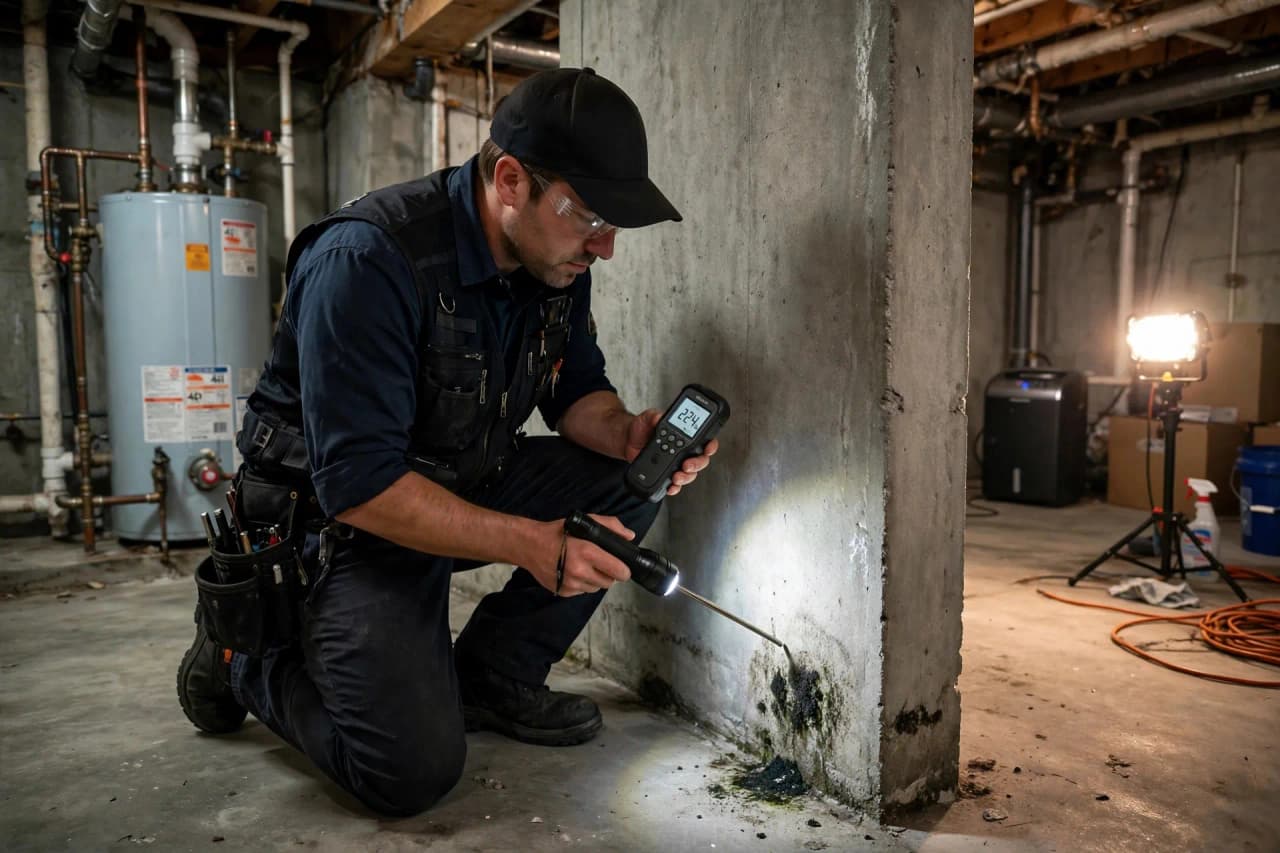
If you own a home in the Capital Region with a basement, you have probably had at least one mold scare down there. Maybe it was the fuzzy patch behind the storage boxes. Maybe it was the smell that hit you halfway down the stairs every August. Basements and mold go together like winter and potholes around here.
But here is what we want every Albany homeowner to understand: basement mold is not inevitable, and it is not something you just live with. It always has a cause, and causes can be fixed. Let us walk through the real culprits and what actually works against each one.
Why Albany Basements Are Mold Magnets
Start with the housing stock. Huge swaths of Albany, Colonie, Guilderland, and Delmar were built between 1900 and 1960, back when basements were designed as cellars, not living spaces. Stone or block foundations, minimal waterproofing, no vapor barriers under the slab. They were built to keep the house up, not to keep moisture out.
Add the climate. We get real humidity in summer, freeze-thaw cycles that open tiny cracks a little wider every year, and spring weather that swings from snowmelt to downpour in a week. The water table in parts of the Hudson Valley sits high, which means hydrostatic pressure is constantly pushing moisture through foundation walls and floors. Your basement is basically a concrete box sitting in damp earth. Without active moisture management, mold is a matter of when, not if.
Then add how people use basements. Finished basement without proper vapor management? Carpet laid directly on concrete? Boxes of old clothes and books stacked against an exterior wall? Every one of those is mold hospitality. The basement is the most moisture-challenged room in the house and the least ventilated. It never stood a chance without help.
Cause #1: Water Coming Through the Foundation
The most common culprit, and the one behind most serious basement mold jobs we see. Water enters through cracks in foundation walls or floors, through the cove joint where wall meets floor, or straight through porous concrete and block. Sometimes it is dramatic, like seepage after heavy rain. Sometimes it is invisible, just steady vapor transmission through concrete that keeps the wall surface damp enough for mold.
The giveaway signs: efflorescence (that white powdery mineral deposit on walls), water stains that darken after rain, or walls that feel cool and clammy even in dry weather. If your basement smells worse after storms, water intrusion is almost certainly part of the story.
The fixes start outside, which surprises people. Extending downspouts at least six feet from the foundation, regrading soil so it slopes away from the house, and keeping gutters clear solve an enormous percentage of seepage problems. These are unglamorous weekend projects that outperform expensive interior systems when the problem is surface water. For water coming up through the floor or persistent wall seepage, interior drain tile with a sump pump is the standard professional answer, and it works when installed correctly.
Cause #2: Condensation on Cool Surfaces
This one fools people because there is no leak to find. Warm, humid summer air hits cool basement walls and floors, and condensation forms, just like on a cold drink in July. Those perpetually damp surfaces grow mold happily with zero plumbing failures involved. If your basement walls feel wet in August but dry in January, condensation is your culprit.
Uninsulated ductwork and cold water pipes sweating in humid basement air add to the problem. So do clothes dryers venting indoors (please tell us yours vents outside) and uncovered sump pits evaporating moisture straight into the air.
The fix is dehumidification plus air sealing. A properly sized dehumidifier, and we mean properly sized for the square footage, not a tiny unit from the big box store, should hold basement humidity between 30 and 50 percent. Insulate cold pipes and ducts so they stop sweating. And cover that sump pit. Condensation mold is genuinely one of the easier basement mold problems to beat, once you know what you are fighting.
Cause #3: Sump Pump and Drainage Failures
Sump pumps are the unsung heroes of Albany basements, and they fail at the worst possible moments. Power outages during spring storms, float switches that stick, discharge lines that freeze or clog, pumps that simply age out after 7 to 10 years. When the pump quits during a wet stretch, water rises, and everything it touches becomes a mold buffet within days.
We see this pattern constantly: homeowner goes on a summer vacation, thunderstorm knocks out power for six hours, they come home to two inches of water and a basement that smells like a swamp by the weekend. Mold does not wait for your schedule.
Prevention is straightforward and cheap compared to remediation. Test your sump pump every few months by pouring water in the pit. Install a battery backup, which is the single best insurance policy for a finished basement. Consider a water alarm that texts you when the pit level rises. And if your pump is pushing a decade old, replace it before it retires on its own terms.
Cause #4: Finished Basements Done Wrong
Nothing breaks our hearts like a beautiful finished basement growing mold behind the drywall. It happens when basements get finished like above-grade rooms: drywall directly against foundation walls, fiberglass insulation stuffed into the stud bays, carpet over concrete. That assembly traps moisture against the cold foundation wall with no way to dry, and mold throws a party in the dark.
The right way to finish a basement in our climate starts with moisture control first. Walls should have already proven dry through a few wet seasons. Use moisture-tolerant assemblies: rigid foam insulation against the foundation, pressure-treated bottom plates, mold-resistant drywall, and flooring that tolerates dampness. Never finish a basement that has active water intrusion and hope the drywall hides it. It will not hide it. It will incubate it.
If you are buying a home with a finished basement in Albany, by the way, this is worth investigating before closing. Ask about the waterproofing history, look for musty smells behind the bar area, and consider a mold inspection. The prettiest basement in Delmar can hide the ugliest surprise.
Fixes That Actually Last (and Ones That Do Not)
Let us rank solutions honestly. Exterior grading and downspout extensions: cheap, effective, do these first. Interior drain tile and sump systems: the professional standard for chronic seepage, and worth the investment if you want a dry basement for decades. Dehumidification: essential maintenance, not optional, in our climate.
Now the ones that do not work. Waterproof paint on the inside of a leaking wall is cosmetics, not waterproofing. It peels within a season or two because it is fighting hydrostatic pressure it cannot beat. Plug-in "mold repellers" and ozone gadgets range from useless to actively harmful. And bleach on porous basement walls, as we have said elsewhere, is theater.
One more honest take: no basement in Albany stays dry by accident. It stays dry by design and maintenance. The homeowners with clean, dry basements are not lucky. They grade, they gutter, they dehumidify, and they pay attention. Be like them.
When to Call a Pro (and What Happens Next)
Call a licensed pro when the mold covers more than a small patch, when you cannot find or fix the moisture source yourself, when there has been flooding or sewage involvement, or when anyone in the household has health concerns that worry you. Also call when the basement is finished and you suspect growth behind the walls, because that investigation needs proper tools.
What happens next is straightforward. A licensed inspector assesses the extent with moisture meters and sometimes thermal imaging, identifies the moisture sources, and writes up a remediation plan. Then a separate licensed remediator (New York requires the separation) does the contained removal, cleaning, and treatment. You fix the water issue in parallel, because remediation without moisture correction is temporary.
Mold Removal Albany is a free referral service connecting you with independent, licensed local pros who do this work every day in basements exactly like yours. The inspection is the best money you will spend on the project, because it turns a scary unknown into a defined scope with a defined price.