
September 2, 2026 · Mold Removal Albany
Preventing Mold During a Capital Region Winter
Winter is secretly mold season in upstate New York. Ice dams, condensation, and sealed-up houses create ideal conditions. Here is how to fight back.
Everyone associates mold with summer humidity, but ask any Albany remediation pro when their phones start ringing and plenty will say February. Winter creates a perfect storm of mold conditions that most homeowners never see coming, because the problems hide in attics, behind walls, and under snow.
The good news: winter mold is almost entirely preventable once you understand the mechanisms. None of this requires heroics. Just a few seasonal habits and a basic understanding of what your house does when it is twenty degrees outside.
Why Winter Is Secretly Mold Season Upstate
Three things happen in winter that mold loves. First, we seal our houses tight against the cold, which traps indoor moisture from cooking, showering, breathing, and laundry with nowhere to go. A family of four can generate gallons of water vapor daily, and in a buttoned-up house in January, all of it is looking for a cold surface to condense on.
Second, the temperature difference between inside and outside gets extreme. Warm moist indoor air hitting cold surfaces, window frames, exterior wall cavities, attic roof decks, condenses into liquid water. That is not a leak. That is physics, and it happens in houses with zero plumbing problems.
Third, ice dams and snowmelt introduce bulk water in sneaky ways. Meltwater backs up under shingles, seeps into wall cavities and attics, and sits there growing mold for weeks before anyone notices a stain on the ceiling. By the time you see evidence inside, the colony has had a nice long winter to establish itself.
Ice Dams: The Winter Mold Delivery System
If you have lived in the Capital Region more than one winter, you know ice dams. Heat escaping into the attic melts roof snow, water runs down to the cold eaves, refreezes, and builds a dam. Subsequent meltwater pools behind the dam and gets forced up under the shingles, into the attic, and down inside walls.
That water does not always announce itself. Sometimes it dries before leaving a visible stain, but not before feeding mold inside the wall cavity or on the attic sheathing. We have opened walls in March and found thriving colonies from a January ice dam the homeowner never knew about. The mold got a two-month head start.
Prevention is about keeping the attic cold, which sounds backward but is exactly right. Proper attic insulation keeps house heat out of the attic, and proper ventilation flushes what gets through. Sealed attic bypasses, those gaps around chimneys, plumbing stacks, and light fixtures that leak warm air upward, matter enormously. A well-insulated, well-ventilated attic grows far fewer ice dams, and grows far less mold as a bonus.
Condensation: The Invisible Soaker
Condensation is winter's quietest mold cause because there is no drip, no stain, no event. Just physics doing its thing on every cold surface in your house. Windows are the visible version: that fog and frost on the inside glass every January morning is condensation, and the sills and frames stay damp enough to grow mold all season.
The invisible version happens inside exterior walls, where warm indoor air leaks into wall cavities and condenses on the cold outer sheathing. You never see it. You just eventually smell it, or find it during a renovation years later. Older homes with minimal wall insulation and lots of air leaks are most vulnerable, which describes a large fraction of Albany's housing stock.
Fight condensation with two weapons: ventilation and humidity control. Run bathroom exhaust fans during showers and for twenty minutes after. Use the range hood when cooking. If your indoor humidity regularly exceeds 40 percent in winter, you have too much moisture for the season, and a conversation with an HVAC pro about ventilation or an HRV system is worthwhile. That window fog is your house asking for help.
The Attic: Winter Mold Ground Zero
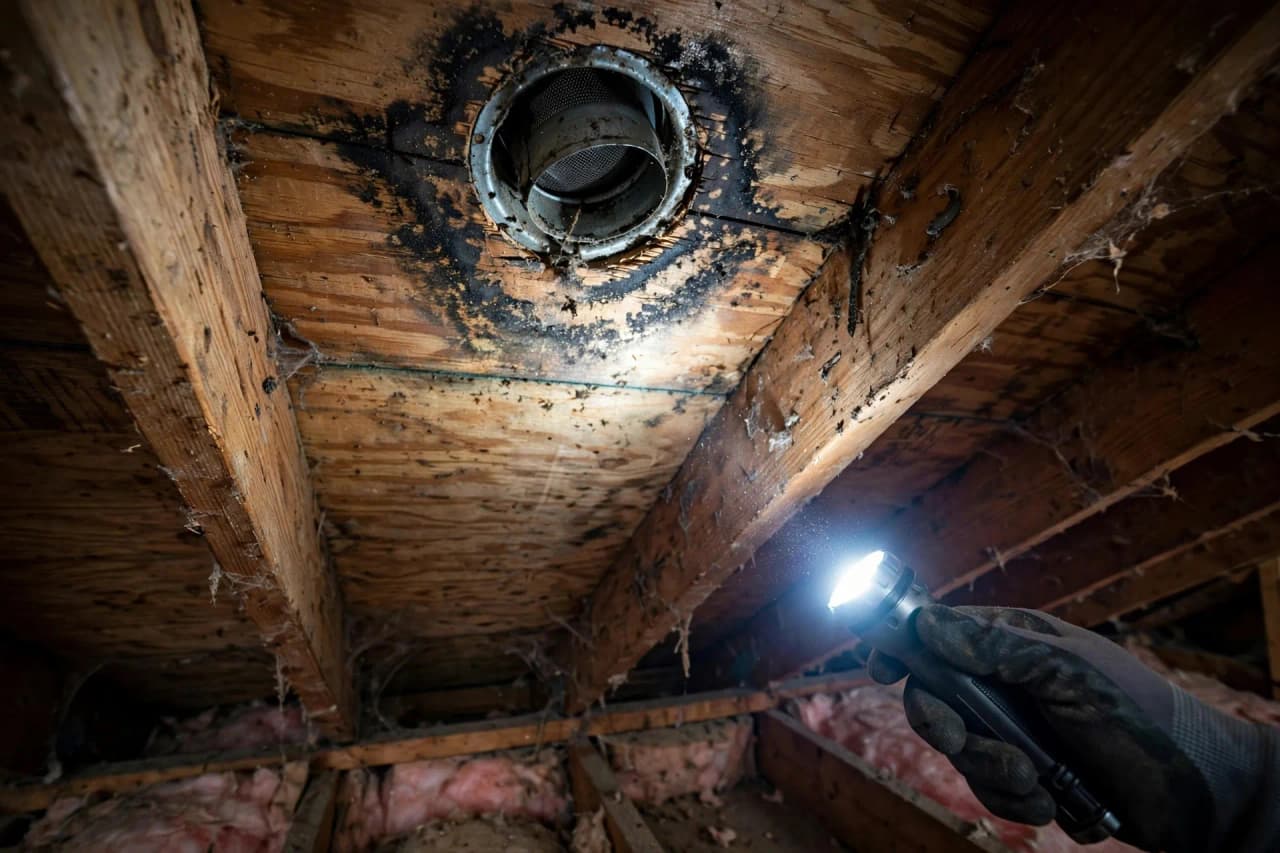
Attics deserve their own section because they are where winter mold hits hardest in our area. Warm air leaking from the living space into a cold attic condenses on the underside of the roof deck, and that sheathing stays damp for months. Add a bathroom fan venting into the attic instead of outside (depressingly common in older homes), and you have a mold farm with a roof over it.
Frost on the underside of roof sheathing or on nails poking through is the telltale sign, visible on a cold morning if you pop your head up there. Dark staining on the sheathing, a musty smell in the attic, or damp insulation are all confirmations. By the time it is visible from the attic hatch, it has usually been developing all winter.
The fix is the unsexy trinity: air seal the attic floor, insulate properly, and ventilate correctly with balanced soffit and ridge ventilation. Get bathroom fans ducted to the exterior, not into the attic or soffit. This work also cuts your heating bills, which makes it one of the rare home improvements that pays you back twice.
Basements in Winter: The Forgotten Frontier
People stop thinking about basements in winter, which is exactly when some basement mold problems start. Foundation walls get cold, indoor humidity from the heating season condenses on them, and nobody is running the dehumidifier because, well, it is winter and dehumidifiers feel like a summer thing.
Snow piled against the foundation melts slowly all winter, keeping the soil saturated against your walls. That is months of hydrostatic pressure and vapor drive. Then spring thaw arrives and delivers the grand finale. Winter is when the moisture loads up, spring is when the bill comes due.
Keep an eye on basement humidity even in winter, and do not retire the dehumidifier entirely if readings creep above 50 percent. Keep snow from piling directly against the foundation where you can. And check the basement a few times over winter, not just when you need the holiday decorations. Five minutes with a flashlight in February can save you a remediation project in May.
Your Winter Mold Prevention Checklist
Here is the practical rundown, roughly in order of impact. Keep indoor humidity between 30 and 40 percent in winter, measured with a cheap hygrometer. Run exhaust fans religiously in bathrooms and kitchens. Make sure the dryer vents outside, not into the basement or attic. Keep furniture slightly away from exterior walls so air circulates.
Outside, keep gutters clear before freeze-up so meltwater drains instead of damming. Rake the lower few feet of roof snow after big storms if your house is ice-dam prone. Keep snow away from the foundation. Check the attic once mid-winter for frost or staining on the sheathing.
And the big-ticket items worth planning: air sealing and insulation upgrades, proper attic ventilation, and getting misdirected bathroom fans ducted outside. These are not just mold prevention. They are comfort and energy improvements that happen to starve mold of the conditions it needs. Do them once, benefit for decades.
When Prevention Was Not Enough
Sometimes you do everything right and still find mold, because the previous owner vented two bathrooms into the attic for thirty years, or the ice dam was biblical. No shame in it. Winter mold that has been growing for months is firmly in professional territory, especially in attics where access is awkward and the affected area is often larger than it looks.
A licensed inspection in late winter or early spring is smart timing. The evidence is fresh, the moisture story is readable, and you can get remediation scheduled before the busy season. Remember that in New York, assessment and remediation must be handled by independent licensed companies, which protects you from inflated scopes.
Mold Removal Albany is a free referral service connecting you with independent, licensed local pros who know Capital Region winter mold inside and out, literally. If your winter left something fuzzy behind, get it scoped properly and fix it before summer humidity gives it a second wind.