
January 21, 2026 · Mold Removal Albany
7 Signs You Need a Mold Inspection in Your Albany Home
Mold loves to hide in Capital Region homes. These seven warning signs, from that stubborn musty smell to peeling paint, mean it is time for a professional inspection.
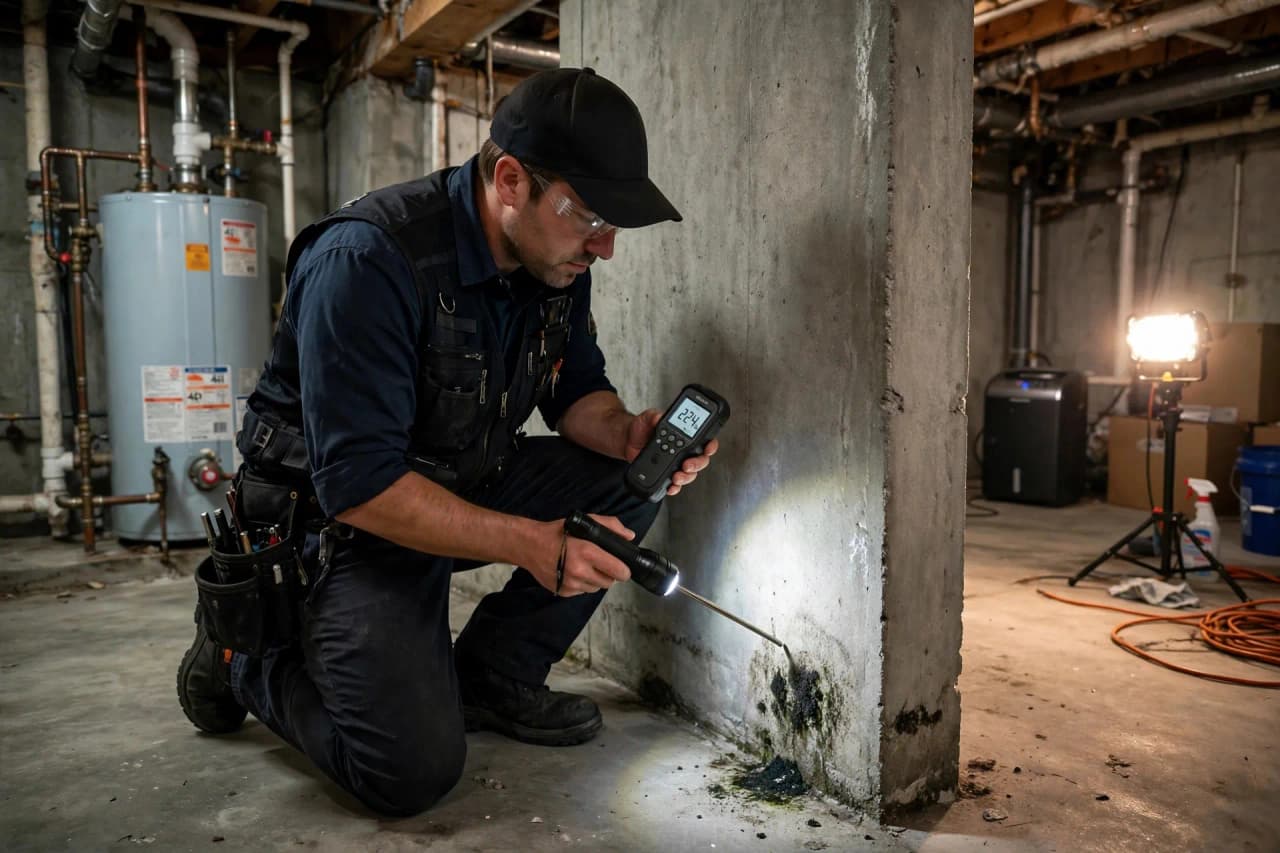
Mold is sneaky. It grows inside walls, under floors, and in corners you never look at, quietly getting worse while life goes on. By the time most Albany homeowners notice it, the colony has had months to settle in. The good news? Your house usually drops hints long before things get serious.
Here are the seven signs that tell us a professional mold inspection is warranted. Not all of them mean you definitely have mold, but every one of them means it is worth finding out. Catching it early is the difference between a quick cleanup and a five-figure project.
1. That Musty Smell That Will Not Quit
You know the smell. Earthy, damp, a little like old library books left in a wet box. If your basement, attic, or a particular room smells musty even after cleaning, that is microbial volatile organic compounds talking, which is a fancy way of saying mold is off-gassing somewhere nearby.
Here is the thing people get wrong: they Febreze it, light a candle, and move on. The smell is a symptom, not the problem. In our experience, a persistent musty odor with no visible source is one of the most reliable indicators that mold is growing somewhere hidden, behind drywall, under carpet, or inside a wall cavity. A pro with a moisture meter and a thermal camera can usually find it without tearing your house apart.
2. Your Allergies Flare at Home and Ease Elsewhere
Do your eyes itch and your nose run at home, then clear up at work or on vacation? That pattern is worth paying attention to. Mold spores are a common indoor allergen, and plenty of people react to them without ever connecting the dots.
We want to be careful here, because we are mold pros, not doctors. Allergy-like symptoms have a dozen possible causes, from dust mites to pollen to that ancient carpet in the spare bedroom. But if symptoms consistently improve when you leave the house for a few days, an inspection is a reasonable next step. Talk to your doctor about the health side, and let a licensed inspector handle the house side.
3. You Can See It (Even Just a Little)
This one sounds obvious, but people talk themselves out of it constantly. "It is just a little discoloration." "Probably just dirt." Look, mold does not need to look dramatic to be real. Small patches on grout lines, dark spots on window sills, fuzzy growth on a basement wall, it all counts.
The size you see is rarely the size you have. What is visible on the surface is often the tip of a colony living inside the wall cavity. A patch the size of your hand on drywall can mean a much bigger problem behind it. That is exactly what inspections are for: figuring out the true extent before you decide what to do about it.
4. Water Found Its Way In
Anywhere water goes, mold eventually follows. Burst pipe? Sump pump failure during one of those spring downpours? Ice dam pushing meltwater under your shingles? Roof leak you patched but never quite dried out? Each of those is a mold inspection trigger, even if everything looks fine now.
Albany homes take a beating from water. Between nor'easters, spring thaws, and summer storms rolling off the Hudson Valley, moisture intrusion is practically a local tradition. Materials that stay damp for 24 to 48 hours can start growing mold, and it does not take a flood. A slow drip under a sink or condensation in a wall cavity will do it.
5. Peeling Paint, Warped Floors, and Mystery Stains
Your house shows water damage in its own language. Paint bubbling or peeling for no apparent reason, hardwood floors cupping or warping, brownish stains blooming on ceilings or walls, these are all moisture talking. And where there is chronic moisture, mold is usually keeping it company.
People tend to treat these as cosmetic annoyances. A fresh coat of paint, a strategically placed rug. But covering the evidence does not fix the cause, and paint over an active moisture problem just gives mold a nice decorated home. If you are seeing these signs, get the moisture investigated before you redecorate.
6. Your House Is Just... Damp
Some houses feel humid no matter what you do. Condensation fogs the windows every winter morning. The basement air feels thick in July. Towels never quite dry. Chronic dampness like this is a mold paradise, and a lot of older Capital Region housing stock, those beautiful 1920s colonials and Victorians in neighborhoods like Pine Hills and Delmar, was built before modern moisture management existed.
Stone foundations, minimal vapor barriers, and decades of small settling cracks add up. If your indoor humidity regularly sits above 60 percent, you are in the danger zone. A $15 hygrometer from the hardware store will tell you where you stand, and an inspection will tell you whether mold has already moved in.
7. You Are Buying or Selling a Home
Real estate transactions are prime mold-inspection territory, on both sides. Buyers, if the home inspection notes moisture, staining, or that telltale musty smell, get a dedicated mold inspection before you commit. What looks like a minor issue in a disclosure can turn into your problem the day after closing.
Sellers, finding mold during a buyer's inspection kills deals or triggers ugly renegotiations. Getting ahead of it with your own inspection lets you address problems on your timeline and with your choice of contractor. In a market like Albany's, where older homes are the norm, proactive beats reactive every time.
What to Do When You Spot One of These Signs
So you recognized your house in one (or three) of the signs above. What now? First, do not panic, and do not ignore it either. Both reactions are common and both are wrong. Panic leads to rash decisions like hiring the first company that answers the phone. Ignoring it leads to the colony doubling in size while you hope it goes away. The middle path is a calm, prompt inspection.
Start with your own eyes and nose. Walk the house with a flashlight and actually look in the places you normally skip: behind the washing machine, under sinks, around the water heater, along basement walls behind storage, and up in the attic if you can get there safely. Note where you see or smell things, and take phone photos. This is not a substitute for a professional inspection, but it makes the pro's visit faster and more focused.
Then call a licensed mold assessor, not a remediation company, for the inspection itself. Remember the New York separation rule: the person who scopes the problem should not be the person selling you the fix. An independent assessor gives you an honest picture of what you are dealing with, a written remediation plan, and the documentation you need for quotes or insurance. That one decision protects you from most of the bad outcomes in this industry.
Finally, act on the moisture, not just the mold. Whatever the inspection finds, the fix has two halves: remove the growth and eliminate the moisture source. Homeowners who do both halves solve the problem once. Homeowners who only do the first half get to do it again in a year or two. Mold Removal Albany is a free referral service connecting you with independent, licensed local pros for both halves of that job, and the inspection is always the right first step.
And one thing to avoid while you wait for the inspection: do not go at visible mold with bleach and a wire brush, especially if it covers more than a small area. Disturbing a colony without containment can launch spores through your home and turn a contained problem into a house-wide one. Leave it alone, keep the area dry if you safely can, and let the pros handle the removal. Patience here is not procrastination. It is strategy.